


Shakespeare Unlimited: Episode 282
Known to many as Lady Danbury in Netflix’s Bridgerton, Adjoa Andoh, MBE, is also a celebrated Shakespearean actor and director.
Across her career, Andoh has returned to Shakespeare not as a fixed canon, but as a space for reimagining power, identity, and belonging. Her landmark Richard II at Shakespeare’s Globe, created with the UK’s first all-women-of-color company, reexamined ideas of nationhood and empire on the eve of Brexit, asking who gets to claim the story of England and how those stories are constructed.
In this episode, Andoh reflects on Shakespeare as a profoundly human writer, exploring how vulnerability, love, and damage shape even his most complex characters. Rather than presenting the plays as distant or elite, she invites us to experience them as living conversations—stories that challenge us to shift perspective and see both the stage and the world more expansively.
During her Director’s residency at the Folger, Andoh will lead a series of public programs, bringing her distinctive approach to Shakespeare to Folger audiences.
Listen to Shakespeare Unlimited on Apple Podcasts, YouTube Music, Spotify, Soundcloud, or your favorite podcast platform.
From the Shakespeare Unlimited podcast. Published March 24, 2026. © Folger Shakespeare Library. All rights reserved. This episode was produced by Matt Frassica, with Garland Scott serving as executive producer. It was edited by Gail Kern Paster. Technical support was provided by Ati Pikal in London, England, and Voice Trax West in Studio City, California. Web production was handled by Paola García Acuña. Transcripts are edited by Leonor Fernandez. Final mixing services were provided by Clean Cuts at Three Seas, Inc.
Adjoa Andoh on Stage and Screen
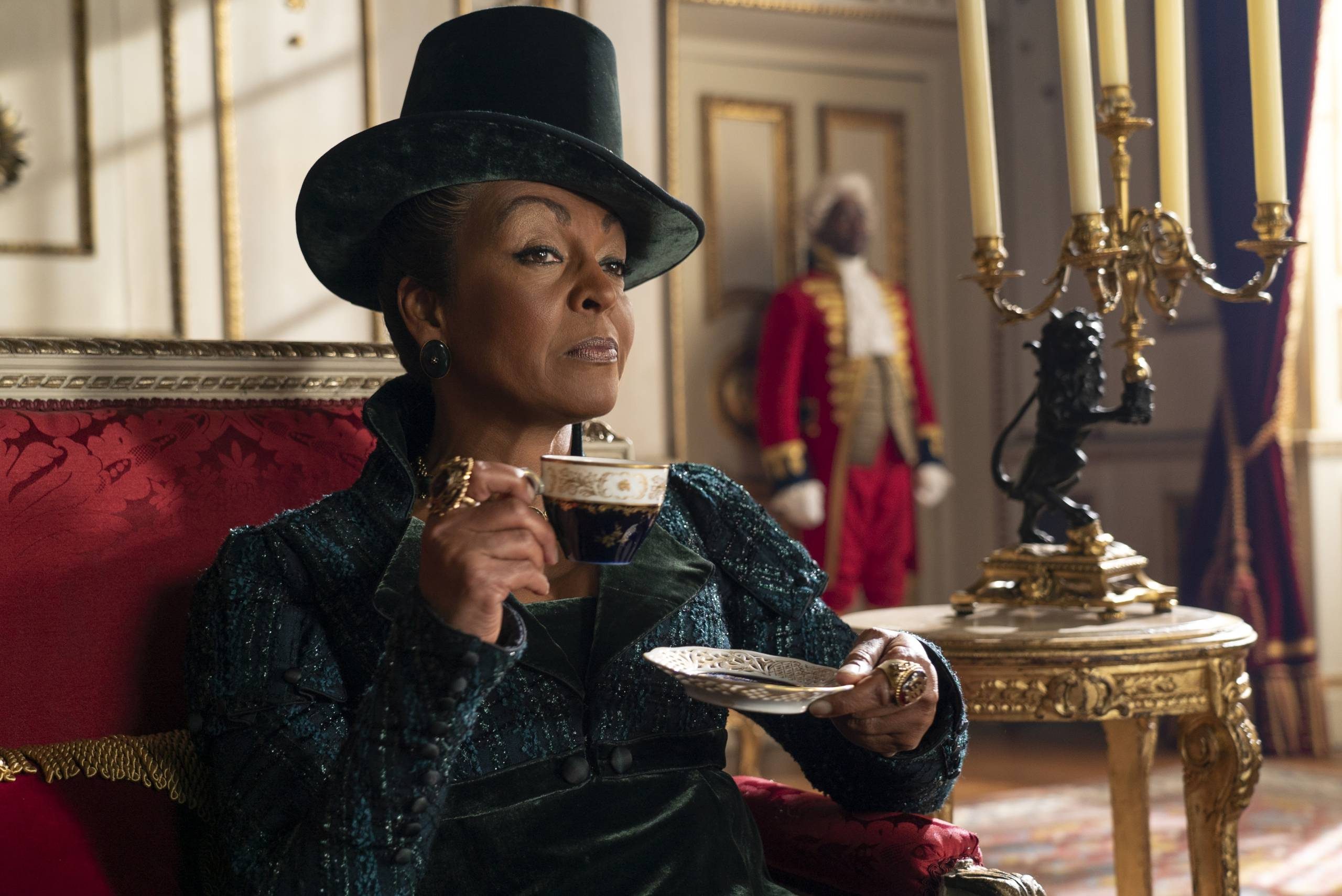

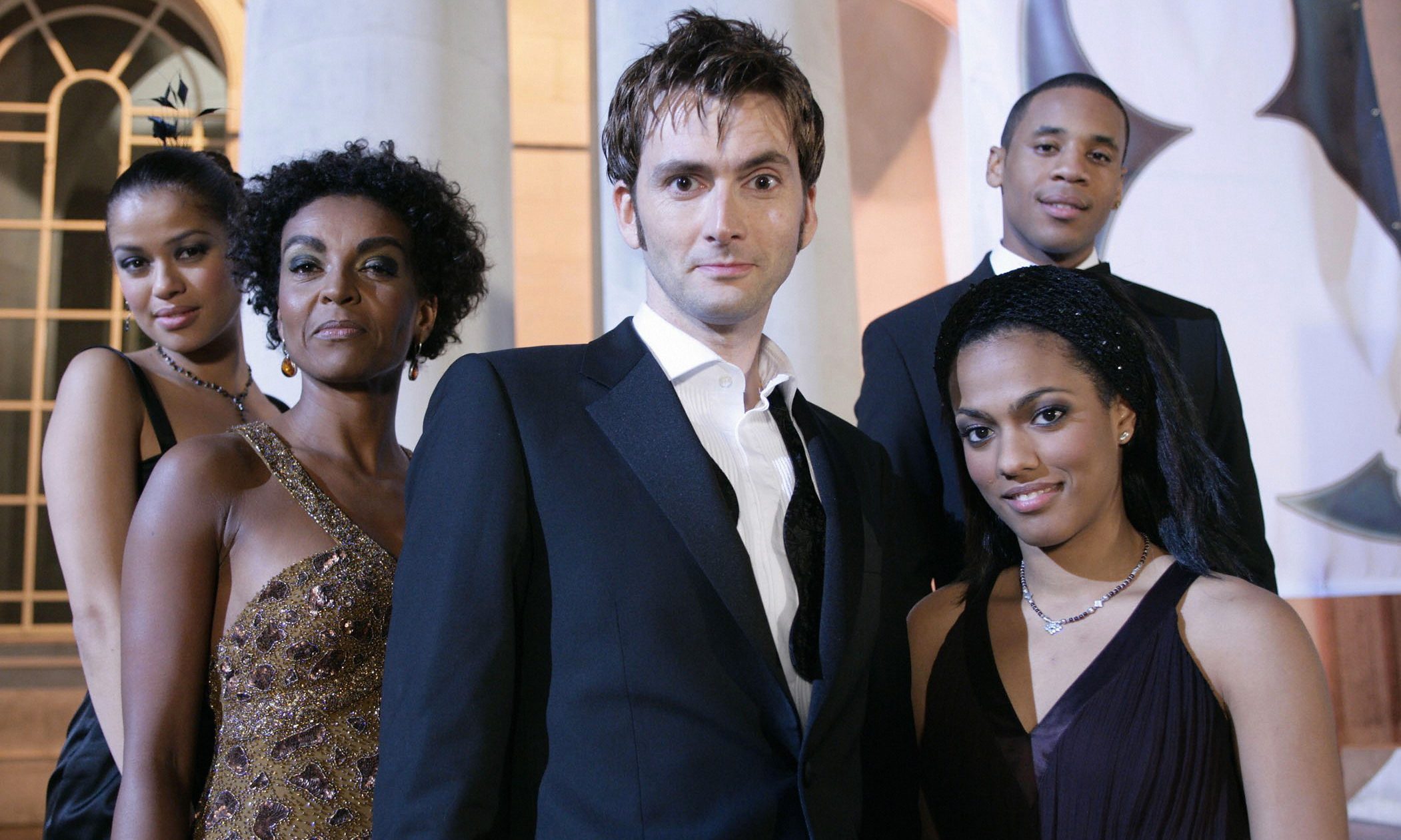
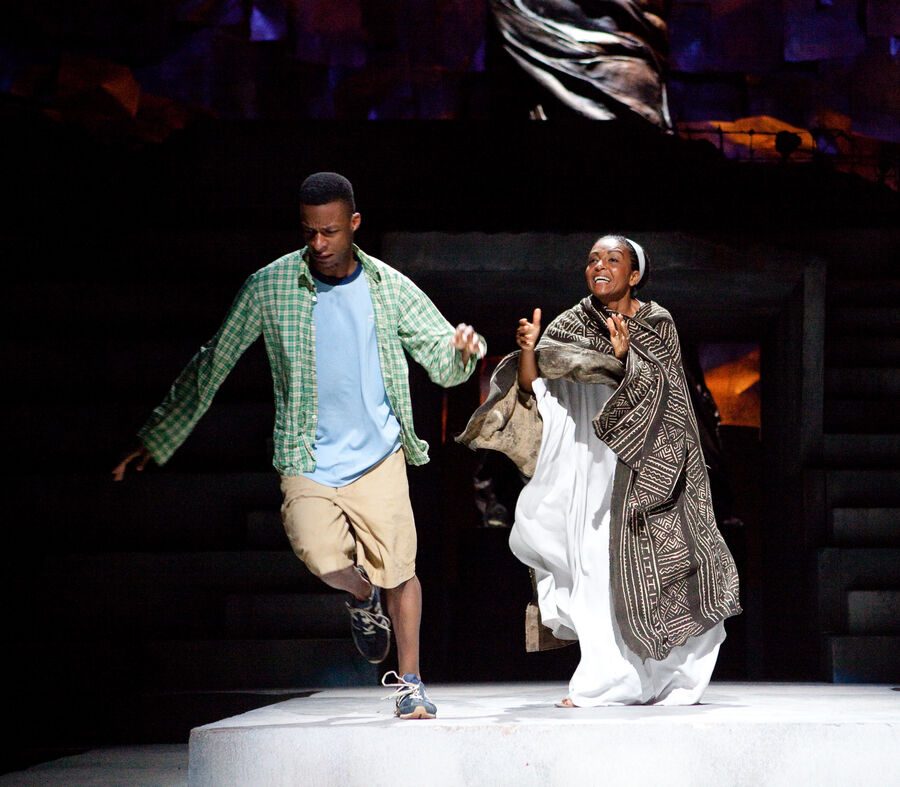
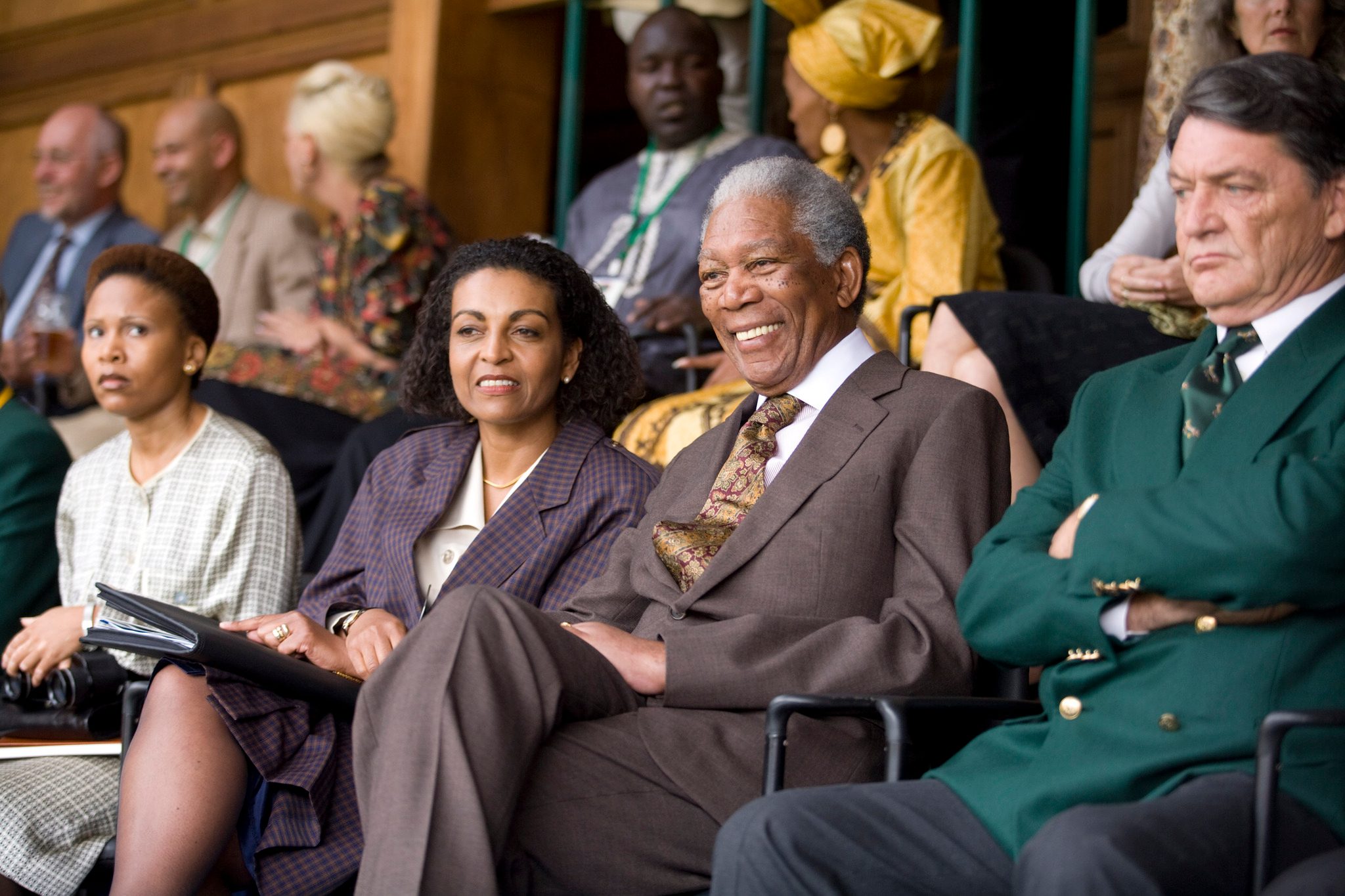
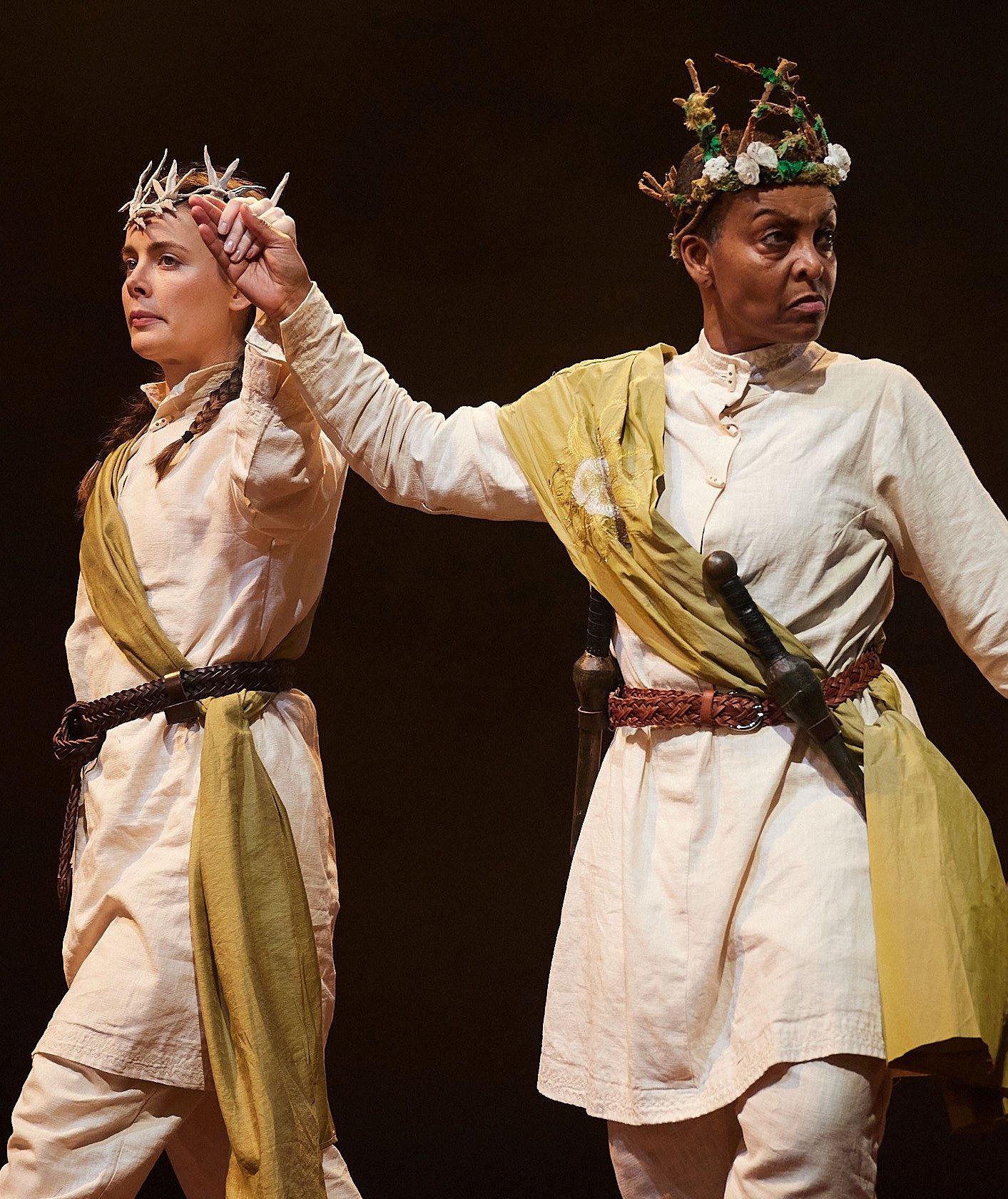
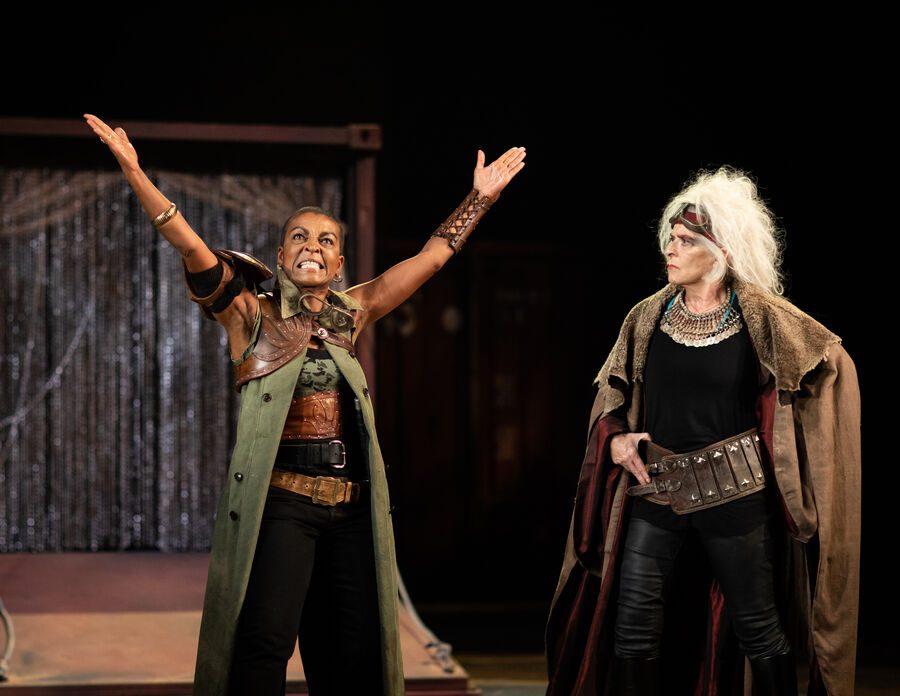
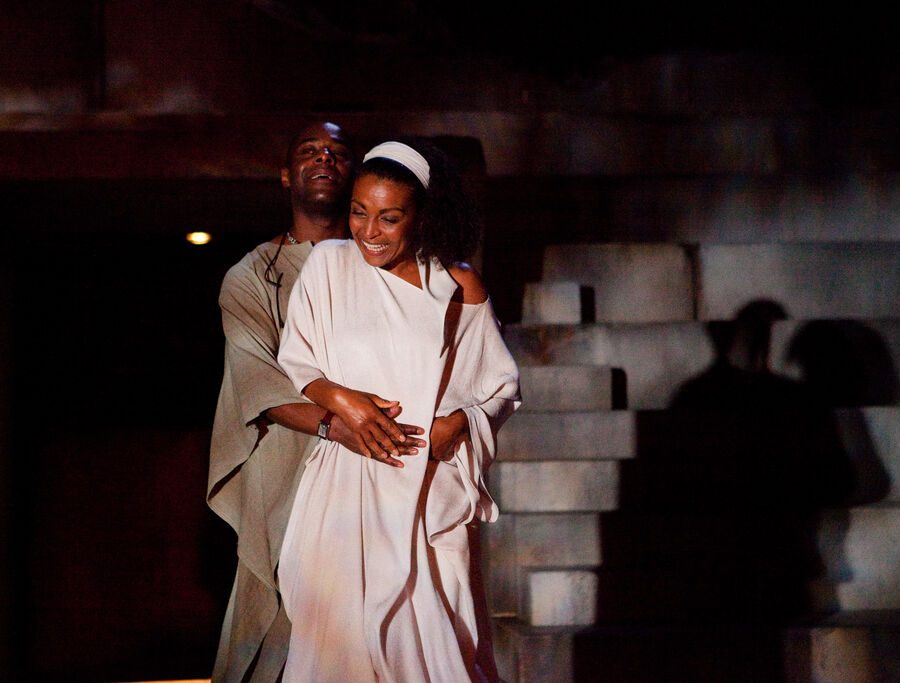
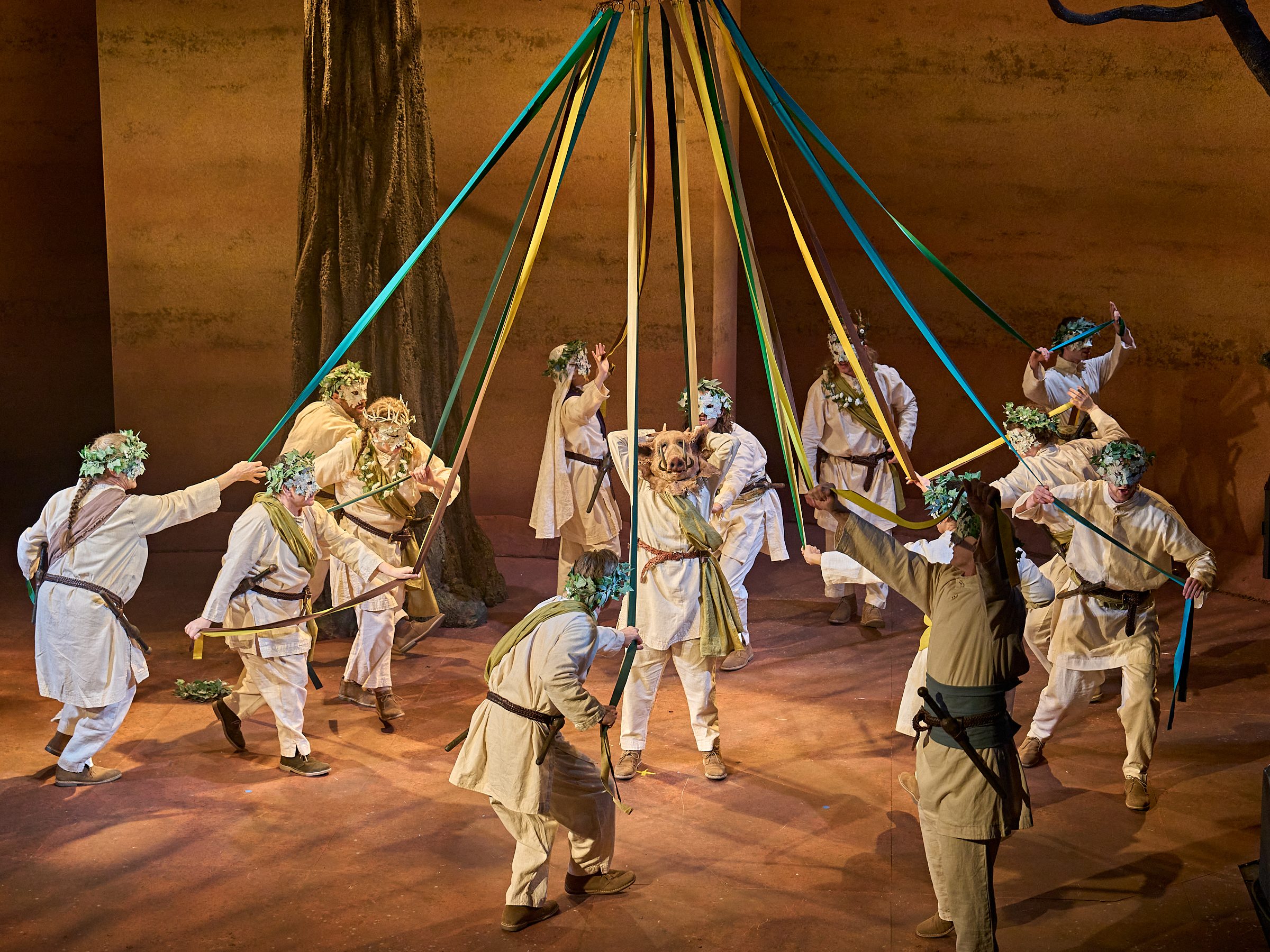
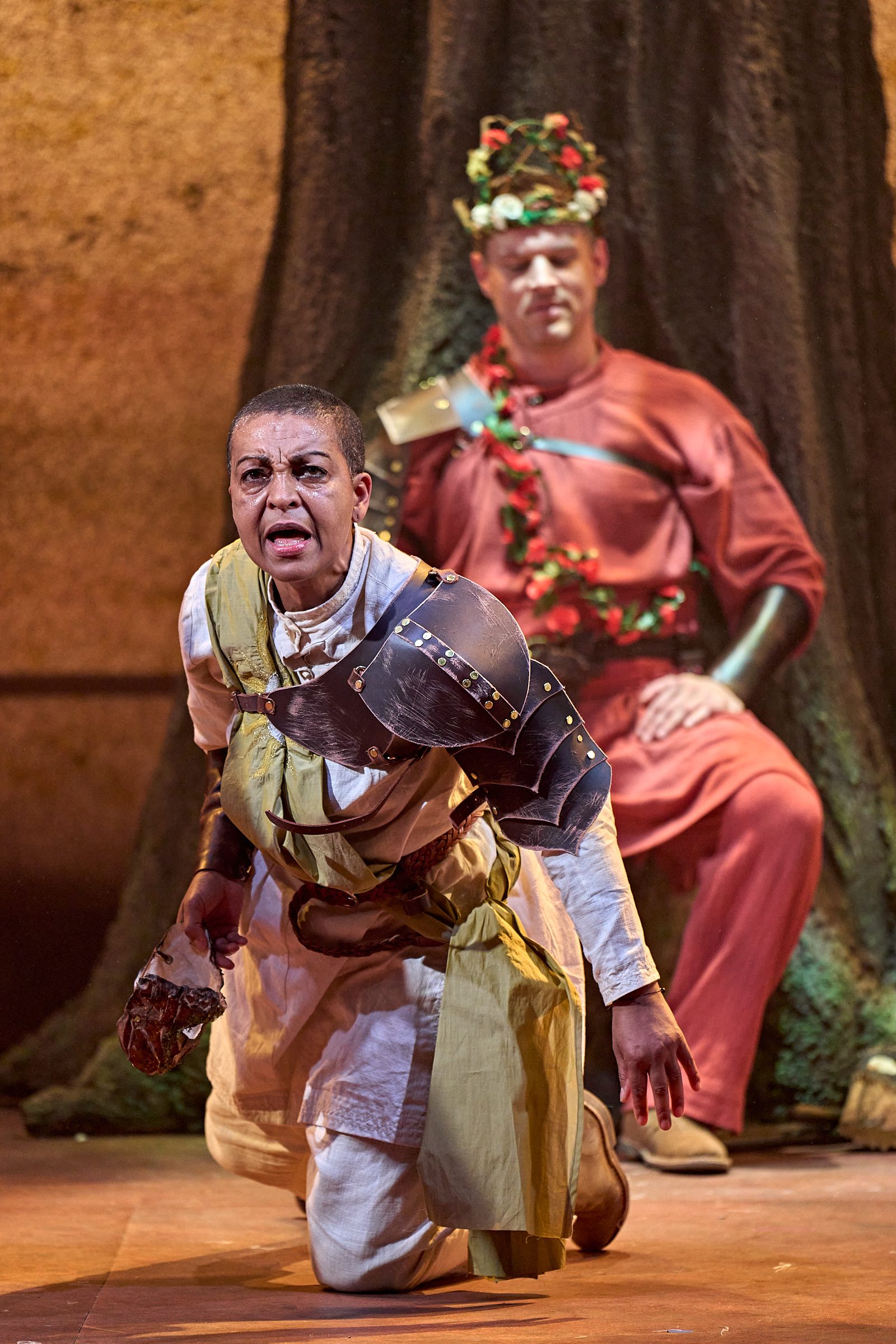
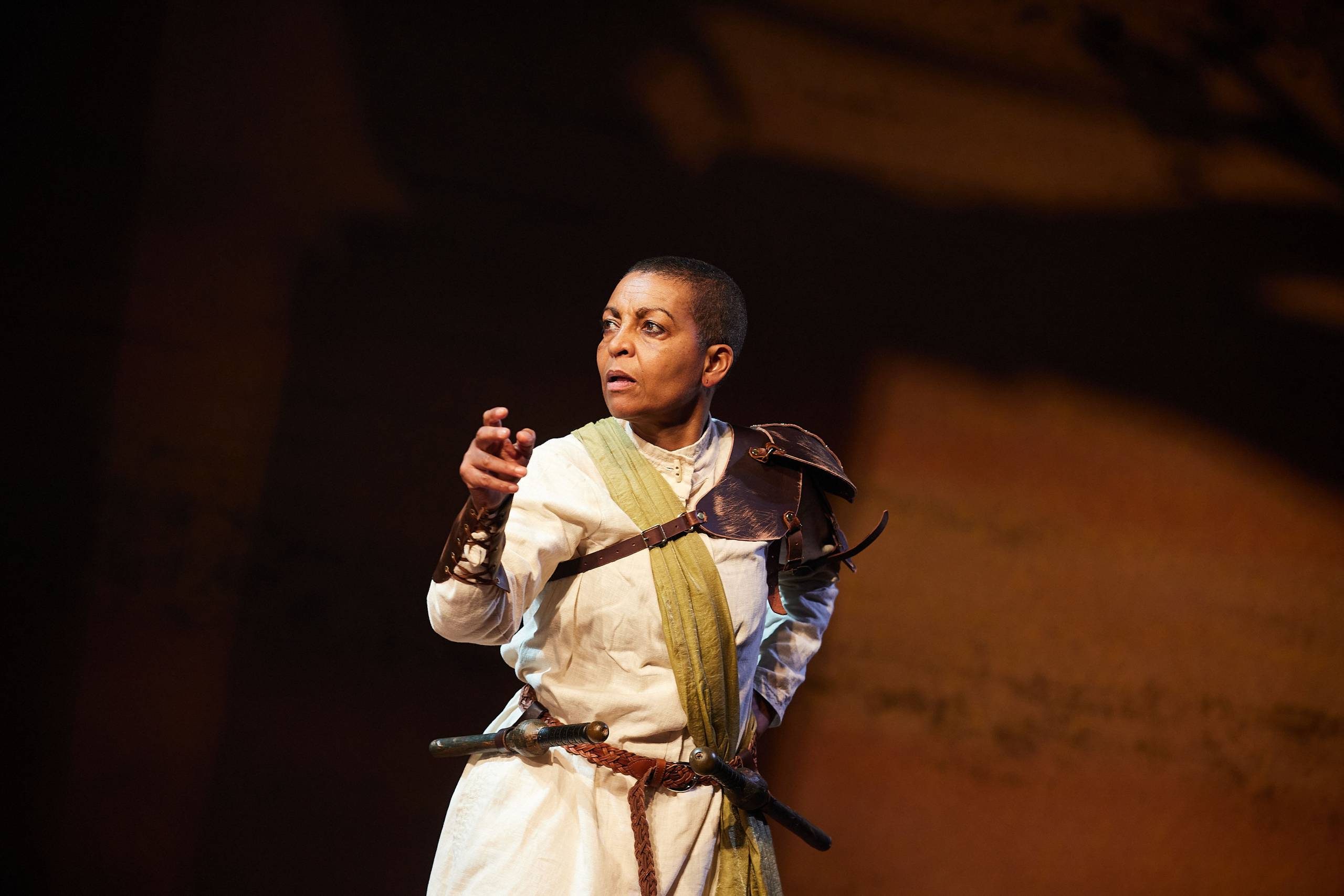
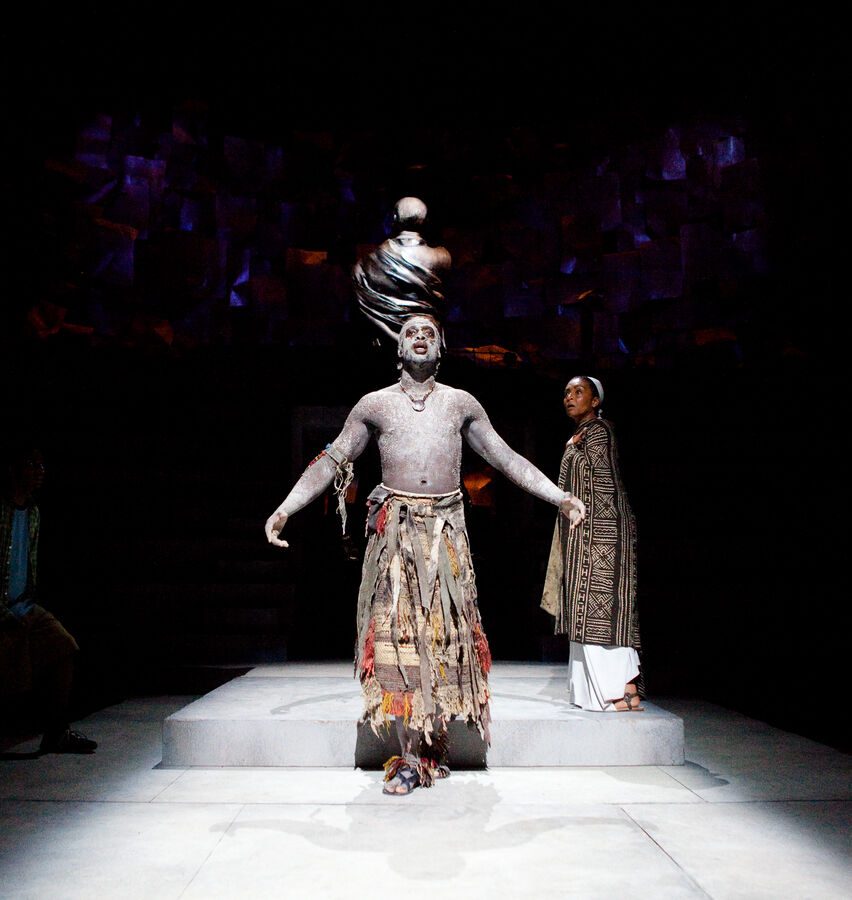
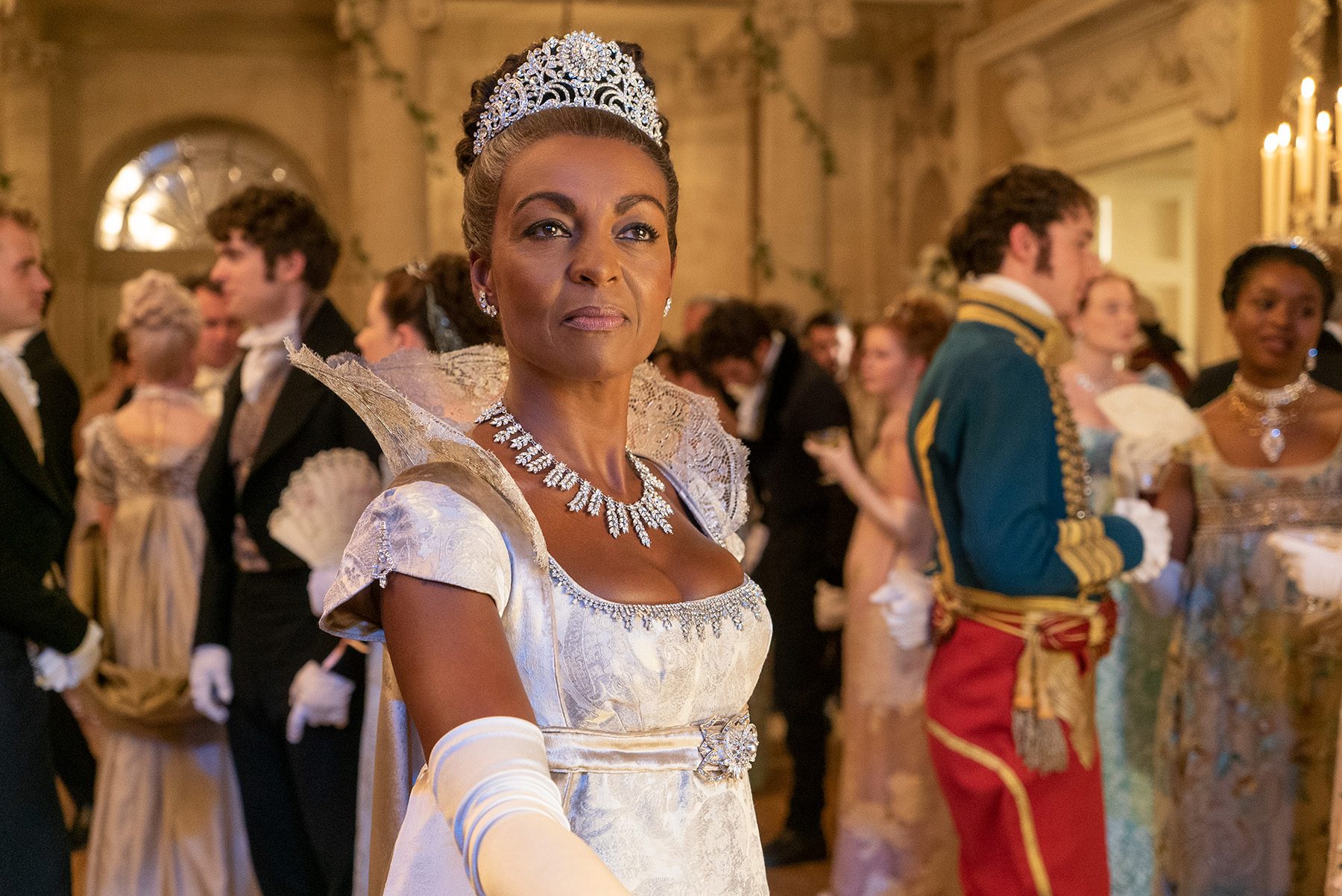
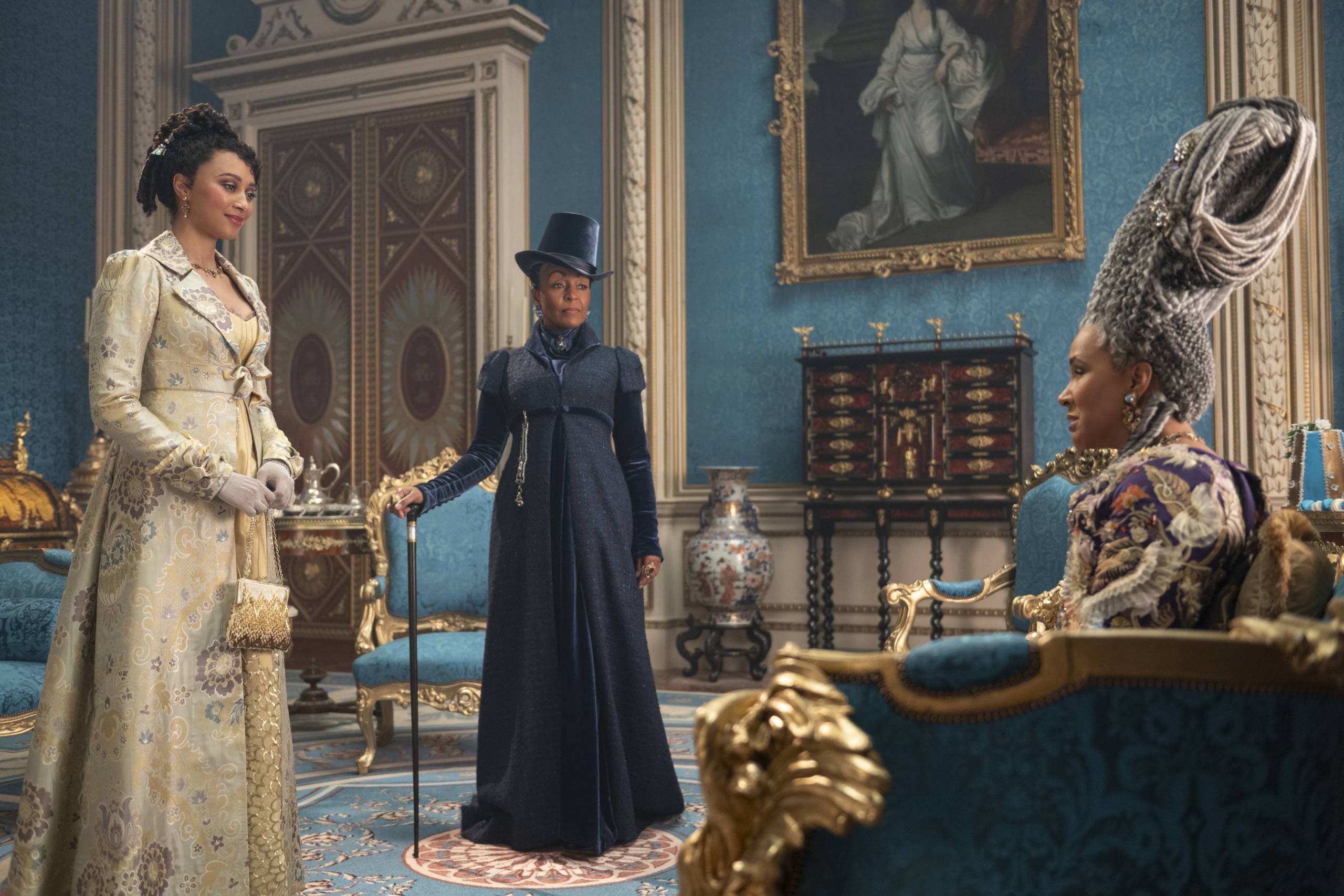
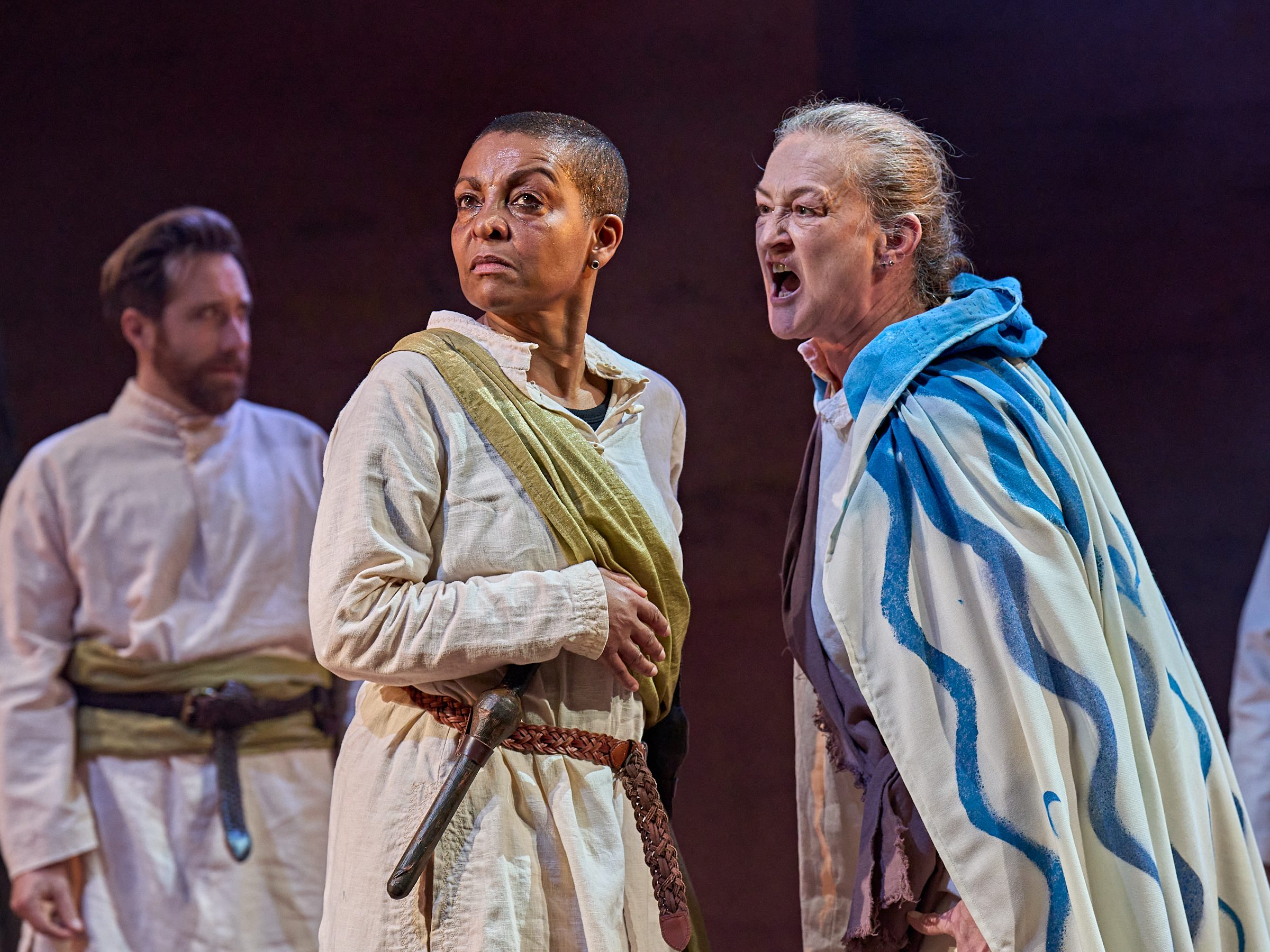
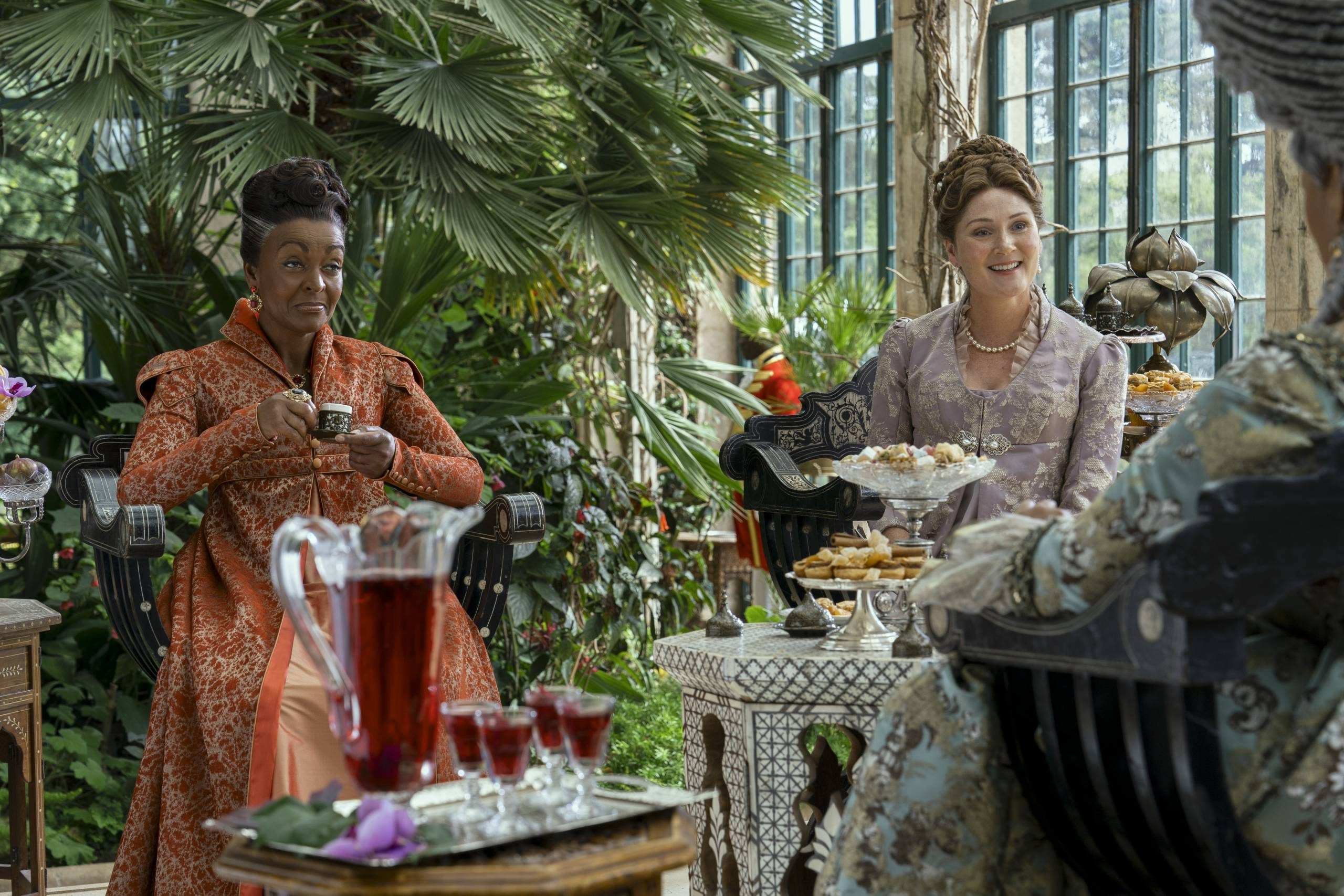
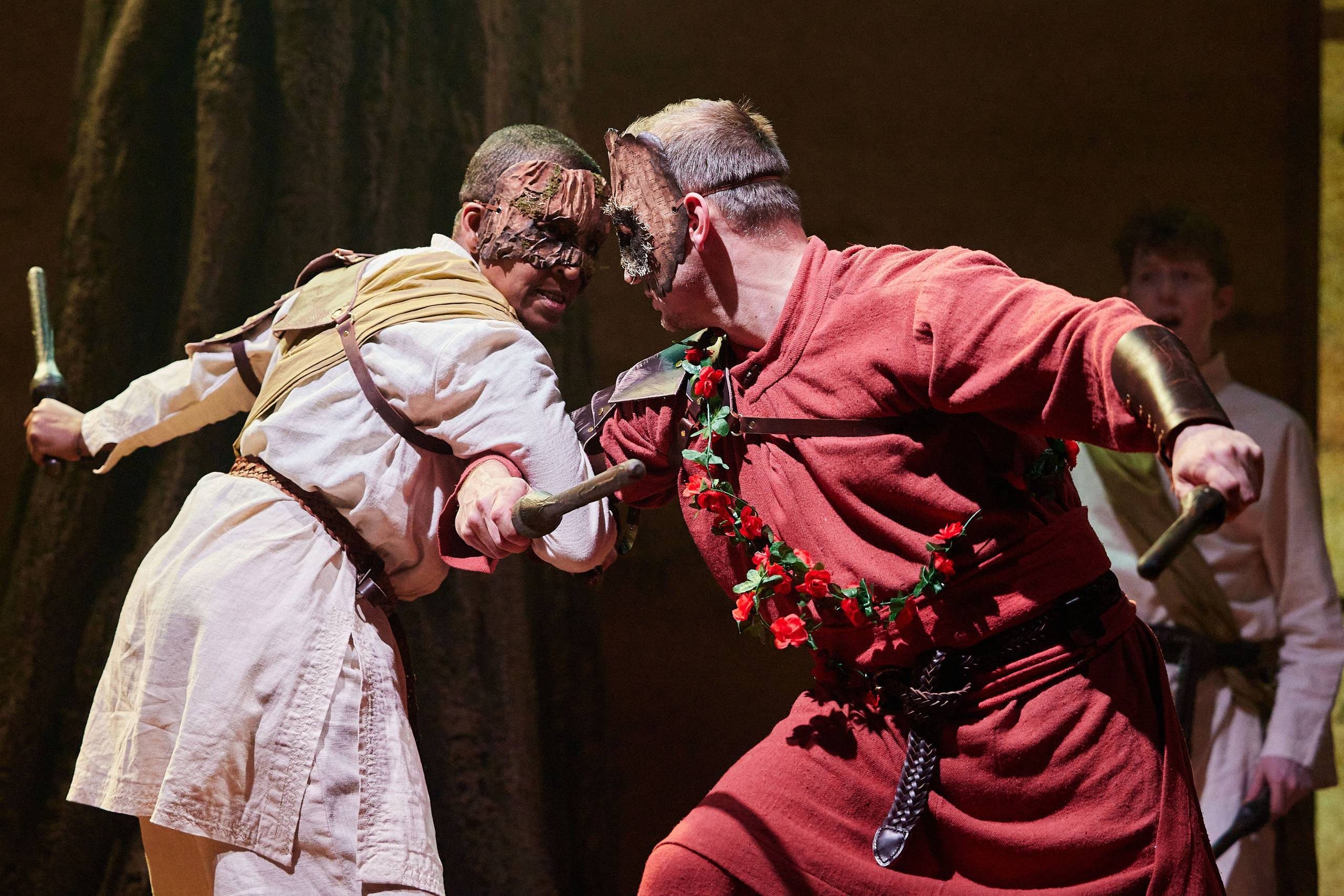
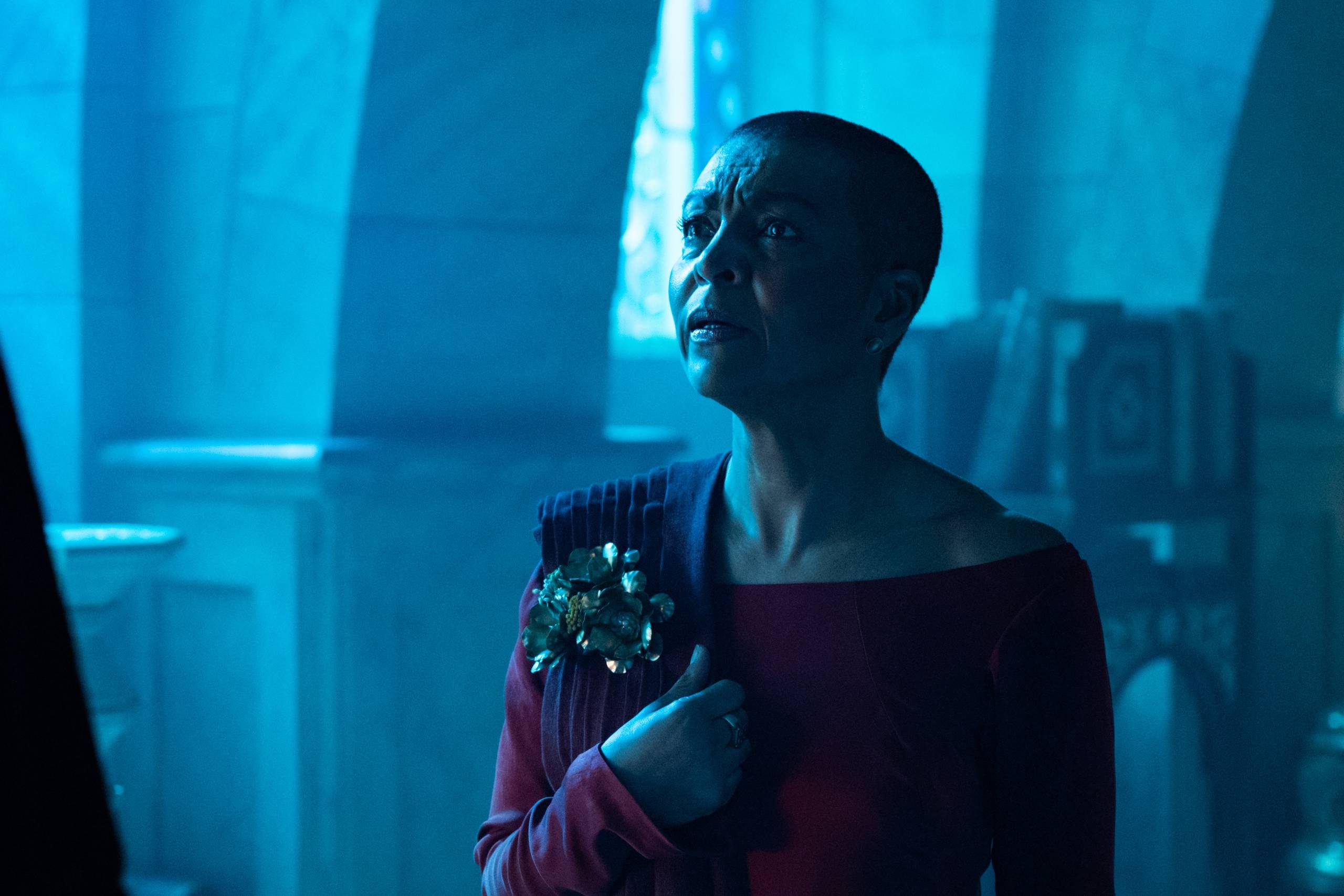
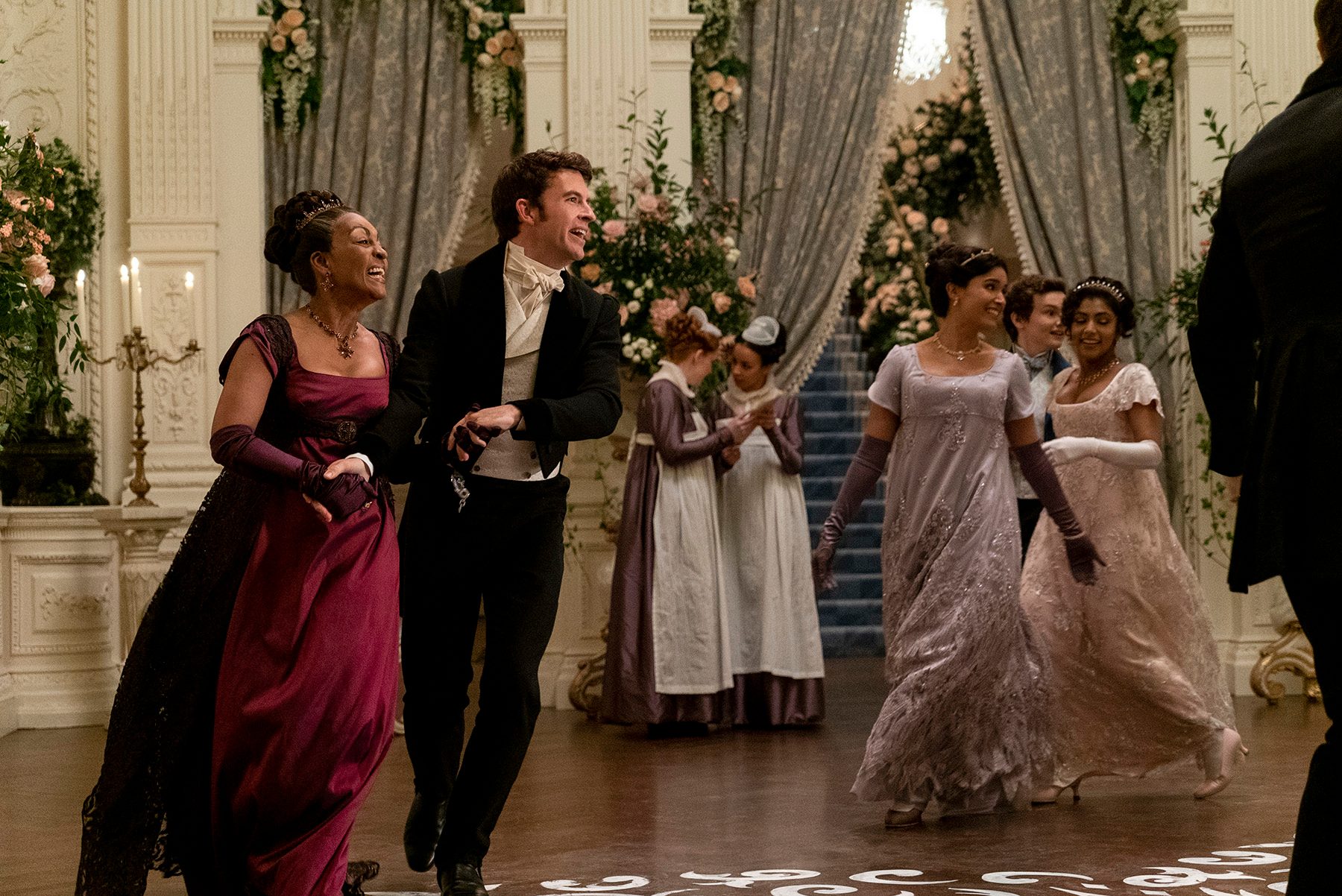
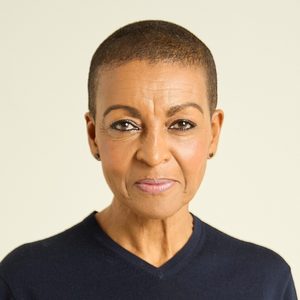
Photo by Shonay
An actor, writer, and director with a career spanning four decades, Adjoa Andoh is best known for playing Lady Danbury in Bridgerton and in its prequel Queen Charlotte: A Bridgerton Story, for which she is a 4-time nominee at the NAACP Awards. She starred alongside Morgan Freeman and Matt Damon in Clint Eastwood’s Nelson Mandela biographical film Invictus. Her many television roles also include Nenneke in the Netflix blockbuster fantasy drama, The Witcher. On the stage, Andoh has had lead roles at the National Theatre, Royal Shakespeare Company, Royal Court Theatre, Young Vic, The Kiln, and in 2019, she conceived, co-directed, and played the lead in Richard II at Shakespeare’s Globe in the UK’s first all women-of-color production. In 2023, Andoh directed, co-produced, and played the lead in a new theater production of Richard lll for Liverpool Playhouse and The Rose Theatre Kingston. Andoh has worked for RADA (The Royal Academy of Dramatic Art) as an audition panel member and director for over 20 years. She has also taught and directed at Rose Bruford Drama School and is an Emeritus Fellow of St Catherine’s College, Oxford. Andoh was the Cameron Mackintosh visiting professor of Contemporary Theatre at Oxford University 2022–2023, and a joint Professor with Sir Greg Doran 2024–2025. She is an award-winning audiobook narrator with over 250 titles to her credit and has worked as an actor, writer, and mentor in BBC radio drama since the 1980s. Andoh is an associate artist at the Royal Shakespeare Company and an honorary fellow of the Shakespeare Association of America, the British Shakespeare Association, and the Royal Society of Literature. She is co-director of the production company Swinging The Lens.
Previous:
Thinking Through Shakespeare, with David Womersley
Adjoa Andoh at the Folger

Tell Out My Soul: What’s The Story and Who’s Telling It?

Shakespeare's Globe Richard II

Federal Theatre Project's Macbeth
Related

Phyllida Lloyd and All-Female Shakespeare
Phyllida Lloyd directed an all-female production of Julius Caesar starring Harriet Walter at the Donmar Warehouse in 2012. It was the first of a trilogy that The Guardian would call “one of the most important theatrical events of the past 20 years.”

Adrian Lester on Playing Rosalind, Henry V, Othello, and Hamlet
Actor Adrian Lester walks us through big moments in his illustrious career, including Cheek by Jowl’s all-male “As You Like It” and Peter Brook’s “Hamlet.”

Dame Judi Dench and Brendan O'Hea on Seven Decades of Shakespeare
Judi Dench and Brendan O’Hea talk about Dench’s experiences playing Ophelia, Gertrude, Lady Macbeth and Titania. Plus, parrots, Polonius, dirty words, hijinks with Sir Ian McKellen, and more.
Transcript
FARAH KARIM-COOPER: From the Folger Shakespeare Library, this is Shakespeare Unlimited. I’m Farah Karim-Cooper, the Folger director.
[MUSIC FADES]
KARIM-COOPER: In the US, Adjoa Andoh, MBE, might be best known as Lady Danbury, the mistress of high society in Bridgerton.
[CLIP from Bridgerton, Season 1, Adjoa Andoh plays Lady Danbury and Regé-Jean Page plays Simon Basset.]
LADY DANBURY: Would it pain you to wear some color, Your Grace? The London season is already terribly monotonous as it is. Must your wardrobe do the same?
SIMON BASSET: I was told this look is all the rage.
LADY DANBURY: Certainly not mine. Take my arm.
KARIM-COOPER: On film, Andoh has played roles such as Nelson Mandela’s chief of staff in Invictus.
[CLIP from the 2009 film Invictus, directed by Clint Eastwood. Adjoa Andoh plays Brenda Mazibuko and Morgan Freeman plays Nelson Mandela.]
BRENDA: You risk alienating your Cabinet and your party.
MANDELA: Your advice is duly noted.
BRENDA: Madiba, the people want this. They hate the Springboks. They don’t want to be represented by a team they cheered against all their lives.
MANDELA: Yes, I know, but in this instance, the people are wrong.
Andoh is also a renowned stage actor and director, with a long Shakespeare resumé. She’s performed in productions of Julius Caesar, Pericles, and Troilus and Cressida.
In 2019, she conceived, co-directed, and starred in Richard II at Shakespeare’s Globe.
[CLIP from 2019 Richard II at Shakespeare’s Globe, directed by Adjoa Andoh and Lynette Linton. Adjoa Andoh plays King Richard.]
KING RICHARD: He is our cousin, cousin, but ’tis doubt,
When time shall call him home from banishment,
Whether our kinsman come to see his friends.
Ourself and Bushy, Bagot here and Green,
Observed his courtship to the common people,
How he did seem to dive into their hearts
With humble and familiar courtesy,
What reverence he did throw away on slaves,
Wooing poor craftsmen with the craft of smiles
And patient underbearing of his fortune,
As ’twere to banish their affects with him.
Off goes his bonnet to an oysterwench.
—Richard II, Act 1, Scene 4
KARIM-COOPER: Andoh’s Richard II was the UK’s first production to have a cast and production team made up of women of color and performed on the eve of Brexit; she had something to say about Britishness.
In 2023, she directed and starred in Richard III.
This April, Andoh will inaugurate a new Director’s Residency program here at the Folger. We’re very excited to welcome her to Washington, DC.
In addition to engaging with the Folger collection, Andoh’s weeklong residency will involve programs open to the public. Like a screening of her Richard II, and a staged reading commemorating the 90th anniversary of the Federal Theatre Project’s Macbeth.
Here’s Adjoa Andoh, in conversation with Barbara Bogaev.
—————-
BARBARA BOGAEV: Adjoa, it is so nice to have you here on the podcast.
ADJOA ANDOH: Very lovely to be here with you, Barbara.
BOGAEV: I cannot believe what a packed slate you have for your one week at the Folger.
ANDOH: Listen, you’re a long time dead.
BOGAEV: I got you. Well, let’s get going, then. Let’s start with the screening of Richard II. You’ve talked about it a lot in the past seven years since it debuted, but do you have new insights or a different framing for this particular Washington-based Folger audience?
ANDOH: The thing I love about Shakespeare is he’s always relevant. At this moment, the world is having conversations about who is a citizen of where and who deserves the protection and the love of the nation state, who is inside and who’s outside the tent. When I conceived of doing Richard II in 2018, it was because we were just coming out of the conversation about Brexit, which necessitated lots of conversations about who the nation felt it was, who it was connected to, who felt what, who felt they were inside the tent, who felt they were outside the tent. Lots of those questions. Richard II is a great play for speaking into that sense of the nation, and the love of nation and how you best treat, preserve, and encourage the flourishing of the nation. I feel like it still has an awful lot of currency in the situations we find ourselves in as a world today.
BOGAEV: Right. We could talk about this for the whole hour, but I’m going to drag it back to theater.
ANDOH: Drag it back. [Both laugh.] No, but I’ll tell you why it’s interesting to me: because theater is in conversation with the world. If it’s good theater, it’s always in conversation with the world.
BOGAEV: Eternally.
ANDOH: When we were doing Troilus and Cressida a few years ago at the RSC, we were thinking about AIDS, we were thinking about COVID, we were thinking about ideas of fear of disease, then we think back to when Shakespeare was writing and the theaters were regularly shut because of plague. So, good theater is always in conversation with what’s happening currently to your point about screening Richard II.
BOGAEV: Well, yes, and everything you’re saying leads me to the question I wanted to ask you about your Richard II. You start it right from the start in the set dressing and the costumes and the casting for your production. This is Richard II, Shakespeare’s alleged love letter to England. You just take aim at the question of who owns the narrative of the dawn of England. Your answer is the colonies that fed its coffers and that’s really clear just in looking at you as Richard. You’re wielding a fly whisk instead of a scepter and that nods to African presidents of the past. You use a shruti box from India. You hear that as part of the musical accompaniment. And your cast comes from all over Africa and the East.
ANDOH: Well, the cast came specifically from all over everywhere that the British empire went to.
BOGAEV: Yes.
ANDOH: I decided, not just the production, but everybody concerned with the production. So, the fight director, the voice coach, the photographer, the program, the people that wrote the program notes, the musicians, the composer, the set designer, the lighting designer, the costume designer. Everybody involved in that production was a woman of color, apart from the candle technician who was attached to the Globe.
Everything about that production, from the poster which had my big brown face in front of a flag of St. George, the flag that’s quite often used to make people fearful if they can’t count their English Anglo-Saxon heritage back generation upon generation. I just decided, “Let’s own the flag. We helped to nurture, stain, flourish this flag that’s our flag. I’m going to have that flag with my big brown face on the front of it.”
I wanted to use women of color because I want to say, “The empire, Great Britain, is great because of all those contributing nations and peoples.” Who is always at the bottom of the heap? Women. Who’s at the bottom of the bottom of the women heap? Women of color. Let’s do everything with women of color, because why not? Because we can. So, that’s just me being a bit provocative, having fun. But then, you know, the minute you do that, then the next thing you have to say is, “Don’t f*ck it up.”
BOGAEV: Well, you already answered my question, which was what kind of conversations you had to create this visual world-making. You made a world, you remade a world. Your Richard, in a way, is very remade as well. I think your Richard II was sharper and smarter or cannier than some Richards I’ve seen. You really travel this long way with many way stations, from Richard as kind of an arrogant guy at the beginning of the play to a very lost little boy doubting his own sanity by the end. So, where did you start in shaping that performance?
ANDOH: I always start with Shakespeare. Everybody has got a perspective on everything and on Shakespeare, my god, we’ve all got a perspective. But for me, I think of him as a great lover of human beings. The fact that he writes on a heartbeat, I know it’s the old cliché, but that he writes on a heartbeat speaks to me of an interest in the human experience in the world.
When you put a load of human beings together their hearts will sink. That’s just scientific fact. It’s what we do. We’re supposed to be in communion with each other. And, for me, the humanity of Shakespeare’s eye and ear means that I must apply that same lens to all the characters.
For me I wanted to look at asking, you know, what does it do to the human psyche if you are told that you are God’s chosen? That you are divinely in the position you are in? So, you’ve got that on the one hand. On the other hand, your father dies when you are young. You are raised in a court that is febrile. You are under the protection of your uncle. Where are your boundaries? Where are your good guides? And who was taking care of your heart?
You know, I trained as a psychotherapist. I’m a bereavement counselor. I trained as what we call a reader in the Church of England, which means you preach, and you take services. I do charitable stuff. I guess I just like people. I’m interested in the wonder of that little boy, Richard. Where does that go amongst all these competing interests, amongst the stories he’s been told about himself and the stories he hears in the court around him?
I think that the character you see at the end of the play is purer by far than anything you see at the top of the play. Shakespeare takes us on that journey and that journey strips away all his trappings of power, but also his sense of himself and his sense of who he is in the world, and what he deserves, and what he owns, and what he earns. By the end of the play, you just have this very simple clarity, which is why I wanted him to be—you know, you talk about the fly whisk, that’s just a symbol of power. By the end, he’s lost all his gold braiding. He’s lost his fly whisk. He’s lost his crown. He’s lost all his jewels. He’s just in a scruffy vest and a pair of pants. I wanted him stripped back physically and emotionally and intellectually, so you get that clarity when he’s in that jail cell of understanding that, you know, unless you can be happy with being nothing, you will never be happy. You are no more or no less than anyone, than any other creature on the planet.
BOGAEV: I had this image of your script that there would be marks all over it but one mark where you found a pivot point: “Okay, this is where the disintegration starts.”
ANDOH: Well, for me, the disintegration starts, I think it’s 3.2 when he comes back from Ireland and he hears that his uncle has switched sides. For me, that’s the moment where everything starts to melt for him and disintegrate. He understands that he is alone.
I think after that you just see disintegration. 4.1. Four, Ones are always interesting with Shakespeare, aren’t they? But this particular 4.1, where Richard has to give up his crown—for me, on a nightly basis, purely as a creator and a storyteller—was one of the most glorious times I’ve ever had in my over four-decade career. I just felt like I’d been given all the choicest foods in the world to eat, the finest drinks, the best clothes, everything. Everything was in that scene, that glorious scene, where the language just takes you on this journey, from hostility and absolute refusal, the sarcasm, the disdain, and it just strips everything away. By the end of the scene, there he is. He is nothing, and he has nothing.
[CLIP from 2019 Richard II at Shakespeare’s Globe, directed by Adjoa Andoh and Lynette Linton. Adjoa Andoh plays King Richard.]
KING RICHARD:
… I have no name, no title,
No, not that name was given me at the font,
But ’tis usurped. Alack the heavy day,
That I have worn so many winters out
And know not now what name to call myself.
O, that I were a mockery king of snow
Standing before the sun of Bolingbroke,
To melt myself away in water drops.
—Richard II, Act 4, Scene 1
ANDOH: I just think it’s a fabulous bravura piece of writing. It’s funny, it’s sharp, it’s vicious, it’s pathetic, it’s everything, and it’s all in.
BOGAEV: Everything human.
ANDOH: Yes, in one scene.
BOGAEV: Yeah.
ANDOH: Glory be, Mr. Shakespeare.
BOGAEV: Oh, that’s wonderful. I want to ask you about physicality and gender. You, in particular, project power and authority. It just resonates, it just vibrates off of you. It creates this wonderful tension when you are vulnerable in a scene because there’s such a distance that you’ve traveled from that.
ANDOH: Yes.
BOGAEV: And you see it in everything from your Richard II and Richard III to Lady Danbury in the TV series Bridgerton. So, I hear you. That was so beautifully said about it all flows from the text, from the character, but what do you draw on to grasp, to vibrate the sense of sovereignty and clout?
ANDOH: I think it depends. You know, you just haven’t seen me playing those parts where I’m the crappy little person who’s desperate to join in and all of that, which is also true. I think sometimes the power that you project is just a cover. It’s not real. It’s just fear turned outwards. So, it looks like it’s in charge, but it’s not.
BOGAEV: And trappings of power.
ANDOH: Trappings of power can do that to you. Or the game face that you choose to put on, that we all do, in different circumstances. I think I always start with the vulnerable because that’s the most interesting and reflective place to start, and then you can think about the strategy and what and how you need to project in order to be what you need to be in any given set of circumstances.
BOGAEV: Well, they’re two sides of the same coin is what I was thinking. I know that you’ve often talked about how some of your earliest school memories are of kids just smashing you upside the head every day so hard that you saw stars. I mean, that toughens you up.
ANDOH: Yes, but that was probably the first six months of my primary school when I was four. You experience things and it teaches you how to be in order to have what you want and avoid what you don’t want. And sometimes you have power to change that situation and sometimes you don’t. But I think what it also did is it toughens you up on one side but on the other side it makes your heart break because you think, “Why is that happening to me? What did I do?”
So, I think both those things are happening at the same time, which is, you know, partly why Richard III was so interesting to me. I’m always curious what happens when you punch down on someone for long enough, and then they punch up. I think it’s all grist for the mill really and I kind of love it because I think it can give you a sense of empathy and a sense of curiosity to go, “Yeah. But what’s going on behind whatever the outward thing is?” Whether it’s somebody who’s very reticent or very shy or timid or somebody that’s a blowhard—what’s really going on? That’s what I’m always interested in.
BOGAEV: Well, I want to pick up on that in relation to Richard III. You’ve said that you’ve loved him since childhood, or the play, since childhood.
ANDOH: Yeah.
BOGAEV: And it seems like that’s the throughline: what happened to Richard? What’s at the root of his alienation?
ANDOH: To make Richard “Richard.”
BOGAEV: Right, the persecution, his otherness. Yeah. So, why have you loved it all your life? What did you see in Richard that you identified with?
ANDOH: I think I empathized quite early on with somebody who was loathed by a parent, was treated with suspicion and disdain, all because of a physical characteristic that he had that those in his community didn’t have. And they decided to ascribe something base to that characteristic. In Richard’s case, it was a spine that was not a regular spine; in my case, it was a brown face in a white community. So, I absolutely empathized with him.
Shakespeare, the humanitarian, the person who’s interested in the heart, he doesn’t start off with having Richard III saying, “I’m a villain, and I’m going to do bad things.” He starts off with saying:
[CLIP of 2023 Richard III at Rose Theatre and Liverpool Everyman & Playhouse Theatres in association with Swinging The Lens, directed by Adjoa Andoh. Adjoa Andoh plays Richard.]
RICHARD: …since I cannot prove a lover
To entertain these fair well-spoken days,
I am determinèd to prove a villain
And hate the idle pleasures of these days.
—Richard III, Act 1, Scene 1
ANDOH: So, his first instinct is to ask for and reach for love. When he has his great terrible nightmare, he talks about dying and nobody caring that he’s died. “I shall despair,” he says. “No creature loves me, and when I die, no soul shall pity me.” Somebody who is without a sense of needing love wouldn’t say those words. I’m super interested in what happened. Richard, what happened? That’s what I wanted to explore.
I think any well-written character will have levels of who they think they are, as opposed to who the world thinks they are, and, you know, justifications for their behavior. Richard, you know, when he gets rid of Anne, his wife, who, in our production, absolutely, he falls in love with her and she with him.
BOGAEV: And that’s what I was going to ask you. It seems that this flows directly out of your emphasis. The throughline is love. So, you do make this choice to interpret Richard as truly falling in love with Lady Anne, the widow of Prince Edward.
[CLIP of 2023 Richard III at Rose Theatre and Liverpool Everyman & Playhouse Theatres in association with Swinging The Lens, directed by Adjoa Andoh. Adjoa Andoh plays Richard]
RICHARD: Vouchsafe to wear this ring.
ANNE: To take is not to give.
RICHARD: Look how my ring encompasseth thy finger;
Even so thy breast encloseth my poor heart.
Wear both of them, for both of them are thine.
—Richard III, Act 1, Scene 2
BOGAEV: So, he doesn’t just seduce her for political or pragmatic reasons.
ANDOH: No, no. Again, I go: Little lost boy, who are your pals? You were great at doing war. Everybody thought you were good at war, but the play opens, and war is done. And who are you now? And what is your place? Because you’re not attractive, you’re not in line for anything, you’re just Gloucester. What’s your life going to be?
Your mother loathes you. She wishes, you know, you died at birth. She regrets what came out of her womb when it comes to you. She doesn’t support you in any way. She publicly humiliates you. You’re the foolish brother to your big, biffy, older king brother. You’re not really loved or cared about in any way. And then suddenly here’s this young woman. She, too, has been caught up in the game of politics. She’s married.
BOGAEV: You’ve just murdered her husband.
ANDOH: Yeah, well, a couple of weeks back. There’s been a respectful space.
BOGAEV: Too soon, too soon. [Both laugh.]
ANDOH: But I just think that for a moment she looks at him with eyes that are not the way people normally look at him. He suddenly sees himself in her gaze and the gaze he sees is astonishing to him.
So, that speech he has when she’s gone, that he has wooed her, him who killed her husband, him who everybody thinks is disgusting and ugly and misshapen and to be avoided. How has he done that? That’s amazing to him. For me, I’m more interested in playing the astonishment and the possibility for transformation through love than I am in playing somebody who’s evil. That’s just not interesting to me. You know, most human beings are not evil. They are the sum of the damage that’s being placed on them. To me, I’d rather watch that, so that’s what I’d rather play.
BOGAEV: Okay, well, this is the part where we talk about what you mean when you talk about swinging the lens, which is the name of the production company.
ANDOH: You know, if you’re on a film set and you want to change focus you swing the lens, you will go from a this-size lens to a that-size lens and it will give you a different focus on what you’re shooting.
So, for example, you see a scene where the fancy folk are sitting, having cocktails or whatever, and the maid or the manservant comes in with the tray and picks up the glasses or delivers more glasses or whatever and then backs out of the room and done. Meanwhile, the conversation is going on with the fancy folk. I’ve always been interested in, “Hang on a minute. Forget the fancy folk. Don’t care about them. Who’s that maid? Does she like her job? How many hours has she been up? Do her feet hurt? Has she got children? Who’s looking after the kids? How long did it take her to get here today?”
So, swinging the lens is also, to me, about going, “Yeah, whatever you lot, let’s have a look at this person.” That’s interesting to me. I feel that a world peopled with a whole variety of narratives that we tell each other would be a world that was more sympathetic to other people’s stories, and sympathetic, therefore, to other people.
BOGAEV: And they shake people out of a rut, out of seeing things the same way. It reminds me of Brian Eno. He has a whole deck of what he calls “oblique strategies.“
ANDOH: Love Brian Eno.
BOGAEV: Yes. And when you get stuck, you pick a card and you think differently. You know, think of it backwards. Tell the story backwards.
ANDOH: Yes.
BOGAEV: Turn this upside down.
ANDOH: Absolutely.
BOGAEV: Swinging the lens, of course, applies to Shonda Rhimes’ Bridgerton, in which you play Queen Charlotte’s closest friend, Lady Danbury, the mentor to all the society folk there.
ANDOH: You know, I think Shonda has done something properly, narratively shaking in our industry, in that I think she’s telling that genre of story in a way that hadn’t been addressed—I mean, it has been now—but hadn’t been addressed in that way before her.
It’s one of the things I love about Shonda. She just goes, “What if we did it from this perspective?” And then she does and it shifts things. As we know, there is no Queen Charlotte in any of the Bridgerton novels, Julia Quinn’s fantastic and very popular internationally best-selling series of books. So, Shonda introduces Queen Charlotte to the mix and introduces Queen Charlotte in a historical form that we haven’t seen before, although it’s absolutely there in the history of the time. And Shonda goes, “Well, let’s have that brown version and stick her on the throne of England and see what that does to the stories that we can tell.” I just think it’s fantastically interesting at another level for viewers of color. It does a couple of things. It says you don’t always have to play the slave or the indentured laborer or the courtesan or all of that stuff. There are other roles available.
BOGAEV: When you’re working on Bridgerton, does your Shakespearean side come into play?
ANDOH: Yes.
BOGAEV: And I’m thinking in this season in particular, you have a storyline of some real depth and poignancy involving your desire to go back to visit your ancestral homeland of Sierra Leone in the story but the queen won’t let you go.
[CLIP from Bridgerton, season 4. Adjoa Andoh plays Lady Danbury and Golda Rosheuvel plays Queen Charlotte.]
LADY DANBURY: It has been the honor of my life that you chose me. I treasure every moment.
But it is time. I long to travel to visit my ancestral home. I have not been there since I was four years old. So, I would like to leave at the end of this season.
Of course, you and I shall write, and I will be back for visits, but I am leaving. I should like to leave for a time.
QUEEN CHARLOTTE: No.
ANDOH: I don’t know if I’m thinking of Shakespeare specifically around that story arc, but I am thinking of Shakespeare in the use of language, the way Lady Danbury uses language.
I think something happens when you do a lot of Shakespeare. Your ear tunes into, you know, why are we using that amount of assonance in a sentence? What’s the alliteration that we’re using here? What is Shakespeare telling us about the state of mind of the character when they use a particular sort of language or particular sort of rhythm?
I want to take that into Danbury because I think she is a woman of precision. Because precision has been the way that she has survived in this society. But also, the sense of stakes. He’s always talking about power. She’s always navigating in a world of, “How do I hold on to power? How do I reinforce my power? Who is powerless? Who needs to have a bit more power? Who needs to step away from the power? And how do I navigate the central power that I have access to, which is the Queen? And how do I use my intelligence to protect her, or further what I want, or just navigate her capriciousness?” All those sorts of things come into it.
BOGAEV: Well, your connection to Shakespeare clearly goes so deep, and it goes so far back. But it sounds like you were first introduced to Shakespeare almost by accident.
ANDOH: I went to see The Tempest. I think I was eight. I went with my friend Liz Johnson. What I thought we were going to see: we were going to see Captain Mainwaring on stage.
BOGAEV: That’s why you wanted to go?
ANDOH: That’s why I went. That was the lure for me. Maybe that was the way it had been sold to us by Liz’s parents. Maybe they thought we’d get the Shakespeare bug sort of tangentially from that but it’s a great play to take kids to.
So, anyway, for American listeners, Captain Mainwaring was a character played by an actor called Arthur Lowe, who was actually a great Shakespearean actor. It was from a sitcom from the 1960s and 70s about a hopeless troop of home guard during the Second World War who were always getting into scrapes and being rubbish.
So yes, I went to see Captain Mainwaring on stage, but Captain Mainwaring was Arthur Lowe playing Prospero in The Tempest. I just think it’s such a fantastic play for kids to see as their first engagement with Shakespeare. It’s just full of magic and comedy and tragedy and love and rage. It’s got everything. So, I just remember being completely caught up in the spectacle of it. That should be your first experience of Shakespeare. It should be watching a production. It shouldn’t be pouring over, you know, a play in a hot, stuffy classroom over weeks and weeks when you just think, “Kill me now if I have to turn the page on this again.”
BOGAEV: Well, exactly. And that’s what I wanted to ask you about, because from that young child, your first encounter with Shakespeare, now here you are an MBE and an ambassador for the Royal Shakespeare Company. How do you plan to make Shakespeare more inclusive in your role as ambassador?
ANDOH: It’s nothing to do with Shakespeare. It’s always to do with how people use Shakespeare as a big stick to bonk people over the head with and go, “You’re too poor, too stupid, and too uneducated for Shakespeare. Go away and watch your silly soap operas and let us carry on.”
I would just say Shakespeare tells banging stories. Lots of them are full of soap opera elements—thank you very much!—of drama, of will they / won’t they, of terror, of horror, of comedy, of slapstick. It’s all going on there because, you know, he was competing with the bear baiting down the road or the prostitute over there or whatever. He had to grab his audience and keep them. His feeding of his family depended on the brilliance of his pen. So, it was a properly transactional showmanship going on as well. It wasn’t some sort of esoteric, “Oh, let me impart my wisdom to the world.” He was a practical man. He needed to make money. He needed to be the best writer so that his company would be taken up and paid. He gave us banging stories, stories with which to do that and those stories are still banging. The fact that we want to, you know, fence them off in a particular way I just find annoying.
BOGAEV: Yet another thing you’re doing while you’re here in Washington is you’re rewriting the Federal Theatre Project’s Legendary Macbeth that was staged in Harlem in 1936 and directed by Orson Welles.
For people who don’t know it, it was a landmark show in many ways. It had a cast of people of color. It was attended by integrated audiences at such a segregated time. It was set in 19th-century Haiti and the witches were priestesses. But it was also pretty much the most stereotypical portrayal of Black people ever. So, a very controversial history. And now you’re doing a staged reading of your revision.
ANDOH: Well, I’m not rewriting Orson Welles’ text. I haven’t read Orson Welles’ text and I don’t know that I’m interested in reading Orson Welles’ text. What I am interested in is the fact of Black classical actors having the opportunity to work together on a production that this very ambitious young 21-year-old took on. Interestingly, there was a Black woman director who wanted to direct it, and she got shoved sideways. So, plus ça change.
What I’m interested in doing really is celebrating the fact of its existence. The fact that there were working actors, musicians, performers in that period who had no problem with Shakespeare but had a problem with not having the opportunity to perform in Shakespeare and this production gave them that opportunity. The fact that it was staged at the Lafayette Theatre in Harlem, and the crowds flocked to see that production.
BOGAEV: It was a sold-out crowd. It was the biggest theatrical production that came out of the Federal Theatre Project.
ANDOH: Exactly. Nobody was intimidated by it being Shakespeare. People just came in because Macbeth is a fantastic play.
So, for me, I want to celebrate those classical actors from 90 years ago. Those Black classical actors following in the tradition of Ira Aldridge who changed the way we do Shakespeare entirely in Britain. I wanted to celebrate the audiences that came to see that production.
Again, it’s about expanding who thinks they’re in it and who thinks they can watch it. Do a reading and let that reading sit in relationship to the geography in which it’s held at the Folger in the theater there, which is in Washington, DC, sitting alongside an enormous great seat of global power. Let’s talk about power and succession in this context of this production and remember that earlier production as well.
BOGAEV: Well, I can’t wait to experience it, to have my heart sink up to it. I hope you have a wonderful time while you’re here in Washington. Thank you so much for this.
ANDOH: Barbara, thank you so much for this conversation. It’s been really lovely talking to you.
—————-
KARIM-COOPER: That was Adjoa Andoh, interviewed by Barbara Bogaev.
Andoh’s Director’s Residency at the Folger runs from April 19th to the 25th.
For more information about public programs at the Folger, including the screening of Andoh’s Richard II and her staged reading of Macbeth, please visit folger.edu.
This episode was produced by Matt Frassica. Garland Scott is the executive producer. It was edited by Gail Kern Paster. We had technical help from Ati Pikal in London and Voice Trax West in Studio City, California. Our web producer is Paola García Acuña. Leonor Fernandez edits our transcripts. Final mixing services provided by Clean Cuts at Three Seas, Inc.
If you’re a fan of Shakespeare Unlimited, don’t forget to subscribe on your favorite podcast app, so you never miss an episode.
Shakespeare Unlimited comes to you from the Folger Shakespeare Library. Home to the world’s largest Shakespeare collection, the Folger is dedicated to advancing knowledge and the arts.
If you’re in Washington, DC, come visit the Folger on Capitol Hill. Come face to face with a Shakespeare First Folio in our exhibition halls or take in a play in our theater or enjoy our Quill & Crumb cafe. We’d love to see you. For more information visit our website, folger.edu.
Until next time, thanks for listening!